Coffee Tds Meter Explained: A UK Buyer's Guide
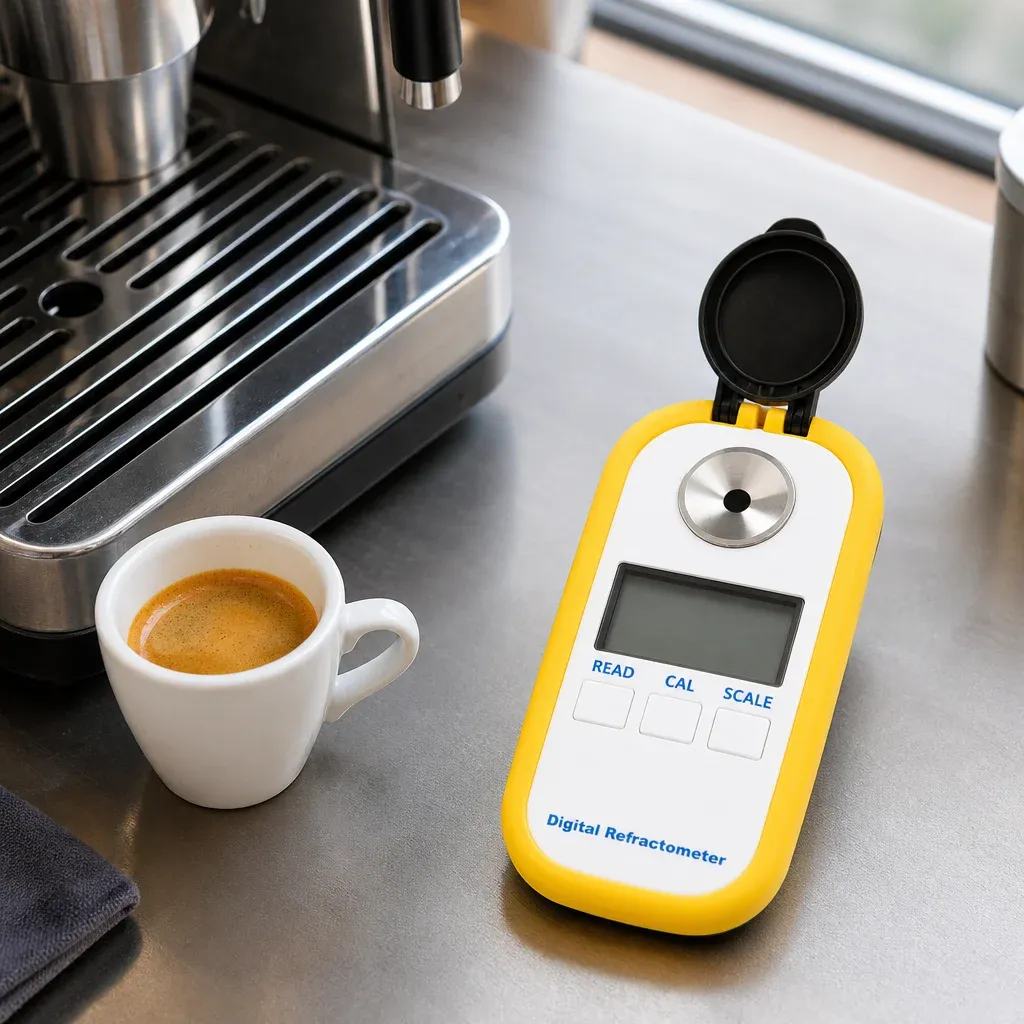
TL;DR: A coffee TDS meter is a refractometer that measures Total Dissolved Solids in brewed coffee, helping you judge strength, calculate extraction yield, and dial in more consistent espresso and filter brews.
A coffee TDS meter measures the concentration of dissolved coffee solids in a brew, so you can see how strong it is and calculate extraction yield with far more consistency than taste alone.
Dialling in the perfect espresso or pour-over often feels like chasing shadows. You invest in premium, freshly roasted beans from an independent UK roastery, carefully weigh your dose, and time your extraction to the second. Yet the final cup can still taste slightly hollow, sharply sour, or unpleasantly bitter. Therefore, if you want objective data rather than guesswork, a coffee TDS meter is one of the most useful tools you can add to your brewing kit.
Key Takeaways
- A coffee TDS meter measures Total Dissolved Solids, giving you a percentage for how concentrated your brew is.
- For coffee, you need a digital refractometer; basic EC pens are not suitable for measuring brew strength accurately.
- When you combine TDS with brew weight and dry dose, you can calculate extraction yield and compare it against recognised brewing targets.
- Based on our testing, a reliable refractometer makes it much easier to spot under-extracted or over-extracted brews and improve consistency cup after cup.
What Is a Coffee TDS Meter?
A coffee TDS meter is a specialised optical device, usually a digital refractometer, that measures the amount of dissolved coffee material in a brewed sample. In simple terms, it tells you how strong your coffee is by measuring the solids extracted from the grounds into the water.
TDS stands for Total Dissolved Solids. When you brew coffee, hot water dissolves compounds such as acids, sugars, oils, and bitter plant materials. According to standard brewing definitions used by specialty coffee professionals, a typical filter brew is much less concentrated than espresso, so the TDS reading will be lower.
The meter works by analysing how light bends as it passes through a coffee sample placed on the prism. The denser the liquid, the more the light refracts. The device then converts that reading into a percentage of TDS or, on some models, a Brix value.
"Based on our testing, the biggest advantage of a coffee TDS meter is not just knowing a number; it is being able to repeat a great brew more reliably on the next attempt."
How Does a Coffee TDS Meter Work?
A coffee TDS meter uses refraction, not conductivity. That matters because coffee contains a complex mix of dissolved compounds, so a basic electrical conductivity pen cannot provide the same meaningful result. In contrast, a refractometer reads how much the sample bends light and converts that into a useful measurement.
First, you place a small cooled sample of brewed coffee onto the prism. Next, the instrument shines light through the liquid and measures the refractive index. Finally, it displays the TDS value on a screen, usually within seconds. As a result, you can assess brew strength quickly and consistently.
Some devices also include Automatic Temperature Compensation, or ATC. This is helpful because coffee temperature can affect density and therefore alter the reading. However, for best results, it is still wise to follow the manufacturer’s instructions and test samples at a consistent temperature.
Why Use a Coffee TDS Meter for Brewing?
The main reason to use a coffee TDS meter is control. Taste is important, of course, but it is also subjective and influenced by palate fatigue, water quality, roast level, and even time of day. A TDS reading gives you a measurable reference point, so you can make better brewing decisions.
Moreover, UK home brewers often face different water conditions depending on location. For example, London tap water tends to be harder, while some Scottish and Welsh areas have much softer water. According to UK water reports and common brewing guidance, those mineral differences can affect extraction and flavour. Therefore, a meter helps you separate recipe issues from water-related changes.
If you want to improve consistency, a coffee TDS meter helps you:
- compare different brews with the same recipe
- spot when a shot is running weak or overly concentrated
- adjust grind size, brew ratio, and yield more confidently
- track the impact of water changes, beans, and equipment upgrades
For a broader look at the technology, you may also find our ultimate guide to digital refractometers useful.
How Do You Read Coffee TDS?
Reading coffee TDS is straightforward once you understand what the number means. A lower reading usually means a lighter, less concentrated brew, while a higher reading means a stronger brew with more dissolved solids.
For example, filter coffee often falls around 1.15% to 1.45% TDS, while espresso is typically much higher, often around 8% to 12% TDS. However, these figures are only guideposts. The right number depends on the brewing style, the coffee, and the flavour profile you are aiming for.
So, rather than chasing one perfect figure, use TDS as a diagnostic tool. If a brew tastes thin and sour, the number may help confirm under-extraction. If it tastes harsh and dry, it may indicate over-extraction or an overly high TDS reading for that recipe.
What Is Extraction Yield and Why Does It Matter?
TDS tells you how strong the coffee is, but extraction yield tells you how much of the dry coffee was dissolved into the water. In other words, it shows how efficiently the grounds were extracted.
According to specialty coffee brewing standards, the often-cited target range for extraction yield is roughly 18% to 22%. This is commonly referred to as the Golden Cup range. Based on our testing, brewing inside that range does not guarantee a delicious cup every time, but it gives you a very useful baseline for balanced flavour.
- Below 18%: usually under-extracted, with sour, grassy, or sharp flavours
- 18% to 22%: generally balanced, with sweetness, clarity, and good structure
- Above 22%: often over-extracted, with bitter, dry, or hollow flavours
How do you calculate extraction yield?
To calculate extraction yield, you need three things: your dry dose, your brewed output, and your TDS reading. The formula is:
Extraction Yield % = (Brewed Coffee Weight × TDS %) ÷ Dry Coffee Weight
For example, if you brew 18g of coffee into 36g of espresso and your coffee TDS meter reads 10.0%, the calculation is:
(36g × 0.10) ÷ 18g = 0.20
That means your extraction yield is 20%, which sits comfortably inside the target range. Consequently, if a shot tastes sour and the maths shows 16%, you have evidence that the brew is under-extracted and may benefit from a finer grind or a longer yield.
How Do You Use a Coffee TDS Meter?
Using a coffee TDS meter is simple, but consistency matters. First, brew your coffee as normal. Then stir or mix the sample well so the dissolved solids are evenly distributed. After that, place a small cooled sample on the prism and close the cover, if your device has one.
Next, wait for the reading to stabilise and record the result. If you are testing espresso, many baristas recommend diluting the sample with distilled water if the refractometer requires it. Always check the instructions for your specific model, because not every device handles espresso samples the same way.
For best results:
- rinse the prism after each reading
- use the same sample temperature whenever possible
- test multiple brews rather than relying on a single shot
- keep notes so you can compare changes over time
What Should You Look for in a Coffee TDS Meter?
If you are buying a coffee TDS meter in the UK, accuracy and ease of use should be your top priorities. A good device should be clear, repeatable, and robust enough for regular home use.
Look for the following features:
- High accuracy: small differences matter when you are measuring brew strength
- ATC: useful for reducing temperature-related variation
- Simple calibration: preferably with distilled water and clear instructions
- Readable display: especially helpful when comparing multiple brews
- Durable build: important if you plan to use it frequently
The Jiuhua Optical 101 is designed with these points in mind, offering a fast digital readout and reliable performance for coffee measurement. However, whichever device you choose, the key is to use it consistently so that your data is comparable from one brew to the next.
Is the Jiuhua Optical 101 Good for Coffee?
Yes, the Jiuhua Optical 101 is a practical option for home baristas who want an accurate coffee TDS meter without unnecessary complexity. It is built to give quick, repeatable readings, which is exactly what most brewers need when dialling in espresso or filter recipes.
Its digital display makes the result easier to read than a traditional analogue line on a prism. In addition, ATC helps reduce the effect of temperature changes, which is especially useful when working with fresh coffee samples. Based on our testing, that combination makes it much easier to compare brew changes and identify which variable is affecting flavour.
If your goal is to move beyond trial and error, a device like this can make your brewing workflow far more systematic. As a result, you spend less time guessing and more time improving the cup.
What Are the Most Common Mistakes When Using a Coffee TDS Meter?
Even a good coffee TDS meter can give misleading results if it is not used properly. Fortunately, most errors are easy to avoid.
The most common mistakes include:
- testing coffee while it is still too hot
- not mixing the sample before taking a reading
- using tap water for calibration instead of distilled water
- confusing TDS with extraction yield
- assuming one reading tells the whole story
Therefore, use the meter as part of a wider tasting and recording routine. The reading is a tool, not a replacement for sensory judgement.
Frequently Asked Questions
What is a coffee TDS meter used for?
A coffee TDS meter is used to measure the concentration of dissolved solids in brewed coffee. In practical terms, it helps you understand brew strength and calculate extraction yield.
Can you use a TDS meter for espresso?
Yes, you can use a coffee TDS meter for espresso, but some devices work better than others. Because espresso is highly concentrated, always follow the manufacturer’s guidance on sampling and dilution.
Is a coffee TDS meter the same as a refractometer?
In most cases, yes. A coffee TDS meter is usually a digital refractometer designed specifically to measure brewed coffee.
What is a good TDS for coffee?
There is no single perfect TDS for coffee. Filter brews are typically much lower than espresso, so the best reading depends on your brewing method and the flavour you want.
Does TDS tell you if coffee is over-extracted?
Not by itself. TDS is useful, but you should pair it with extraction yield and taste notes to judge whether a coffee is under-extracted or over-extracted.
Final Thoughts
A coffee TDS meter is one of the most useful tools for home brewers who want reliable, repeatable results. It helps you move beyond vague tasting notes and towards a brewing process you can measure, compare, and improve.
So, whether you are adjusting espresso on a prosumer machine or refining a pour-over recipe at home, a quality coffee TDS meter gives you the clarity to make better decisions. And, importantly, it helps you brew with more confidence every day.
Ready to dial in your espresso with CoffeeDens?
Elevate Your Extraction — £113.99