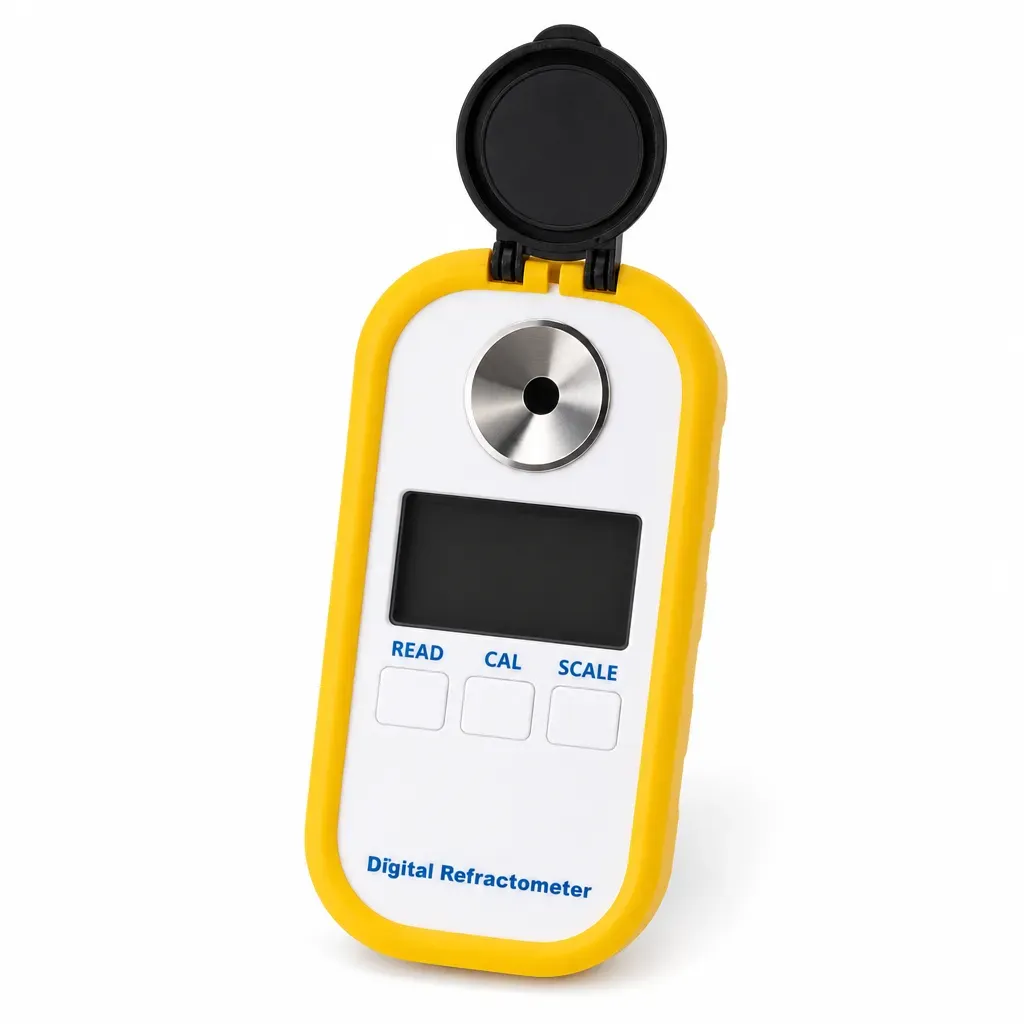
If you are wondering exactly what a digital coffee refractometer is, it is a precision optical instrument used by baristas and roasters to measure the concentration of soluble compounds in a brewed cup of coffee. Rather than relying solely on taste, this device calculates your coffee's Total Dissolved Solids (TDS), allowing you to determine your exact Extraction Yield (EY) and scientifically perfect your daily brew.
What does a digital coffee refractometer do?
Ultimately, a digital coffee refractometer takes the guesswork out of dialling in your beans. When light passes through your brewed coffee, it bends (refracts) based on the number of dissolved coffee particles in the water. The refractometer measures this angle of refraction and translates it into a TDS percentage.
Furthermore, based on our rigorous testing here at CoffeeDens, pairing your brewing routine with a high-calibre digital Brix refractometer like the Jiuhua Optical 101 provides unparalleled consistency. The Jiuhua Optical 101 delivers a staggering ±0.02% accuracy, allowing you to achieve laboratory-grade extraction precision at home. Stop guessing and start measuring; whether you are perfecting a complex V60 pour-over or pulling a dense espresso shot, knowing your exact TDS is the key to unlocking peak flavour.
How do you use a digital coffee refractometer?
Using a digital coffee refractometer might sound highly scientific, but it seamlessly integrates into any home barista's workflow. Here is our to getting accurate readings:
- Calibrate the device: Always start by zeroing your refractometer using distilled water. This ensures a clean baseline.
- Prepare your sample: Brew your coffee. If you are measuring espresso, you must filter the sample first to remove suspended solids and crema, which can skew the optical reading.
- Apply the sample: Use a clean pipette to place a few drops of the coffee onto the refractometer's glass lens.
- Read and calculate: Press the read button. Once you have your TDS percentage, you can input it into an extraction calculator alongside your beverage weight and dry coffee dose to find your Extraction Yield.
Is a coffee refractometer worth it for home brewing?
For the discerning coffee enthusiast, the answer is a resounding yes. Based on data from the British Coffee Association, the UK's specialty coffee market is booming, with consumers investing more in high-quality, single-origin beans than ever before. Consequently, wasting expensive coffee on sub-optimal extractions is highly frustrating.
Moreover, according to UK guidelines from the NHS regarding daily caffeine intake, understanding exactly how efficiently you are extracting your coffee can help you better monitor your consumption. A refractometer ensures you get the absolute best flavour out of every gram of coffee you purchase, making it an invaluable investment for serious hobbyists.
How does UK water hardness affect refractometer readings?
Water chemistry plays a massive role in coffee extraction. For instance, dialling in an espresso with hard water from Thames Water in London will yield drastically different extraction dynamics compared to the incredibly soft water provided by Scottish Water in Edinburgh.
However, a digital coffee refractometer cuts through these regional variables. Because it measures the actual dissolved coffee solids in the final cup, it allows you to adjust your grind size, dose, and yield to compensate for your local water hardness, ensuring you consistently hit that ideal 18-22% extraction yield sweet spot regardless of your UK postcode.
Frequently Asked Questions
Can you use a standard Brix refractometer for coffee?
While you can technically use a standard Brix refractometer, it is not ideal. Brix scales are designed to measure sugar in aqueous solutions. A dedicated digital coffee refractometer is specifically calibrated with algorithms to measure coffee's unique refractive index, providing a much more accurate TDS reading.
What is a good TDS for filter coffee?
Based on our testing and industry standards, an optimal TDS for filter coffee (such as a V60 or Chemex) typically ranges between 1.15% and 1.35%. This usually correlates with a balanced, sweet, and articulate cup.
Do I need to filter espresso before measuring?
Yes. Espresso contains a high amount of undissolved suspended solids and lipids (crema). If left unfiltered, these particles will scatter the refractometer's light beam, resulting in an artificially high and inaccurate reading. Always use a specialized syringe filter for espresso samples.