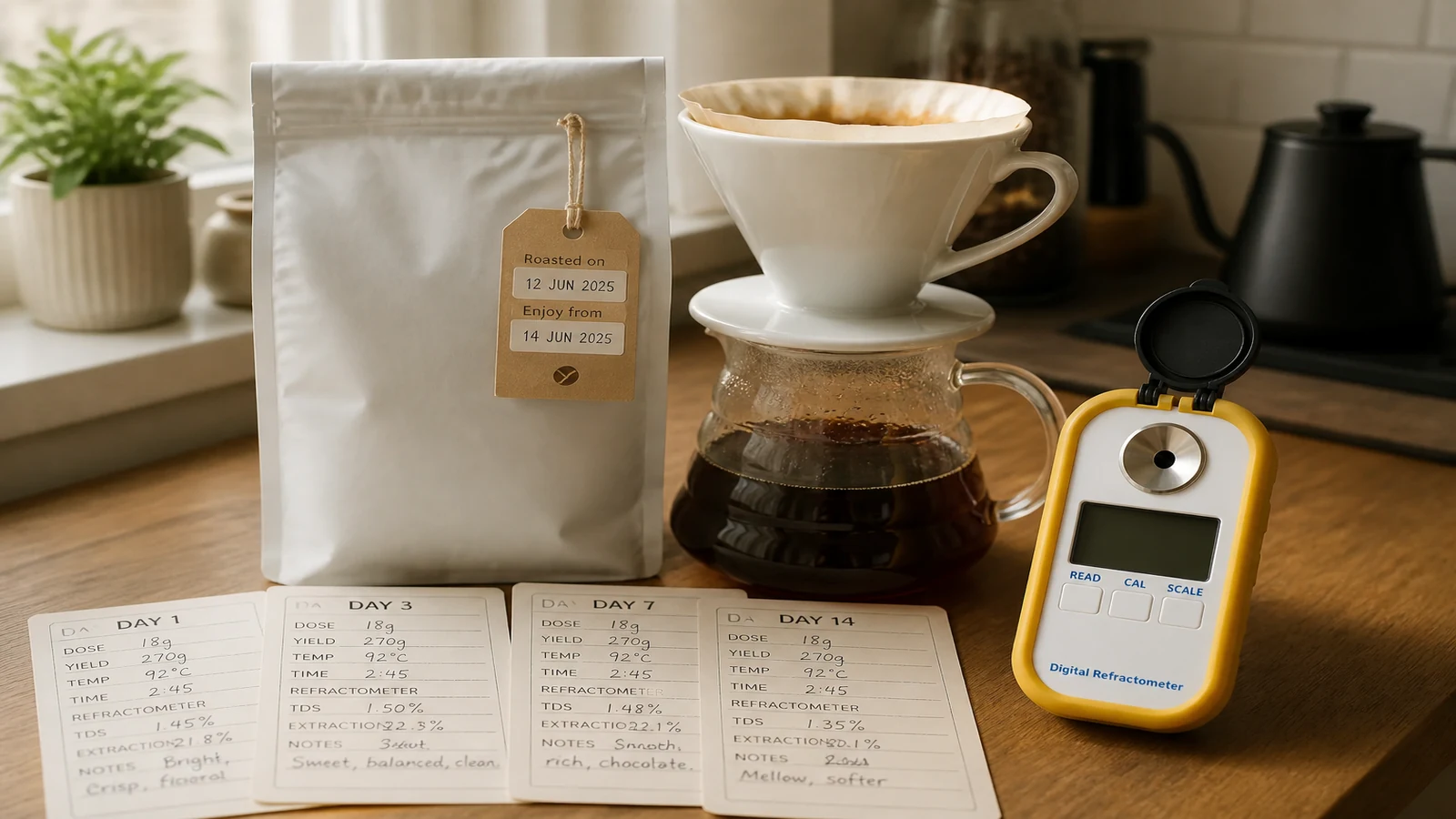
Dial in freshly roasted beans with refractometer and TDS logs
Freshly roasted beans degas CO₂ for days, changing bed resistance and extraction even when your grinder setting stays put. That is why a recipe that sang on a two-week-old bag can taste fizzy, fast and sour on day three. TDS measurement lets you dial in a new roast with fewer wasted brews by showing whether you need more rest, a finer grind or a ratio tweak—not all three at once.
Why new roasts fight your old recipe
Gas pockets slow early infiltration, then suddenly accelerate drawdown as the bag opens up. Light roasts especially resist extraction until they have rested. Tasting alone, you might grind finer to fix sourness while the real issue is still degassing—not under-extraction in the steady state.
Rest period before the first serious measurement
Many UK home brewers start measuring meaningfully around three to seven days post-roast for filter coffee, but the right window depends on packaging, roast depth and storage. Take one exploratory cup early if you like, yet treat TDS targets as binding only after drawdown stabilises day to day.
Day-by-day dial-in with TDS targets
Fix dose and water first. For filter coffee, aim within the commonly quoted 1.15% to 1.45% TDS band while keeping extraction near 18% to 22%. If TDS is low and extraction is low, grind finer. If TDS is low but extraction is already high, increase dose or reduce yield weight rather than grinding into bitterness.
Separating gas, grind and ratio effects
If drawdown times swing by more than twenty seconds bag-to-bag while TDS climbs, rest is still the dominant variable—wait before chasing grind. When time stabilises but TDS drifts, adjust grind in small steps and remeasure. Log date, rest day, time, TDS and extraction so you can replay the winning row when the next bag arrives.
Knowing when to stop tweaking
Stop when three consecutive brews land in your target band and taste matches intent. Fresh roasts can keep slowly opening; minor grind touches after day ten are normal. Avoid daily wholesale recipe changes that erase your log’s usefulness.
Log numbers with a kitchen-friendly refractometer
The Jiuhua Optical 101 lists automatic temperature compensation—helpful when you pull samples hot off the V60—and an IP65 sample well you can rinse between multiple morning tests. Confirm price and specifications on the live detail page before buying; the dial-in method depends on consistent TDS, not a specific brand story.
Should I measure coffee straight off the brew?
Stir, then let hot samples cool briefly and wipe the prism between readings to limit evaporation error.
Can I dial in espresso the same way?
Yes, but target bands differ—espresso TDS is commonly quoted around 7% to 12% on the same product FAQ.
Does resting longer always improve TDS?
No. Very old beans can taste flat while still hitting TDS targets; taste and date still matter.