Coffee refractometer hot sample temperature UK: cooling and calibration
Pulling a refractometer reading from a steaming V60 sample is where UK kitchen workflows often fall apart. Heat shifts refractive index, water evaporates from the prism in seconds, and an uncalibrated zero drifts your entire log. Automatic temperature compensation helps, but it is not a substitute for a consistent sample prep ritual—especially when you are comparing Monday and Friday brews on the same beans.
Why hot coffee lies on the prism
Refractometers infer concentration from how light bends through a thin film. Hot liquid has different density and viscosity, and steam can leave the prism before the reading settles. Even with compensation algorithms, splashing boiling coffee onto the sensor invites bubbles and uneven film thickness that software cannot fully correct.
What automatic temperature compensation does
ATC adjusts the displayed value toward a reference temperature band so small sample temperature differences do not dominate your log. The CoffeeDens listing for the Jiuhua Optical 101 states automatic temperature compensation for hot brews. Treat that as support for typical filter samples—not permission to drip boiling espresso directly onto the optics without cooling.
Cooling workflow UK brewers actually use
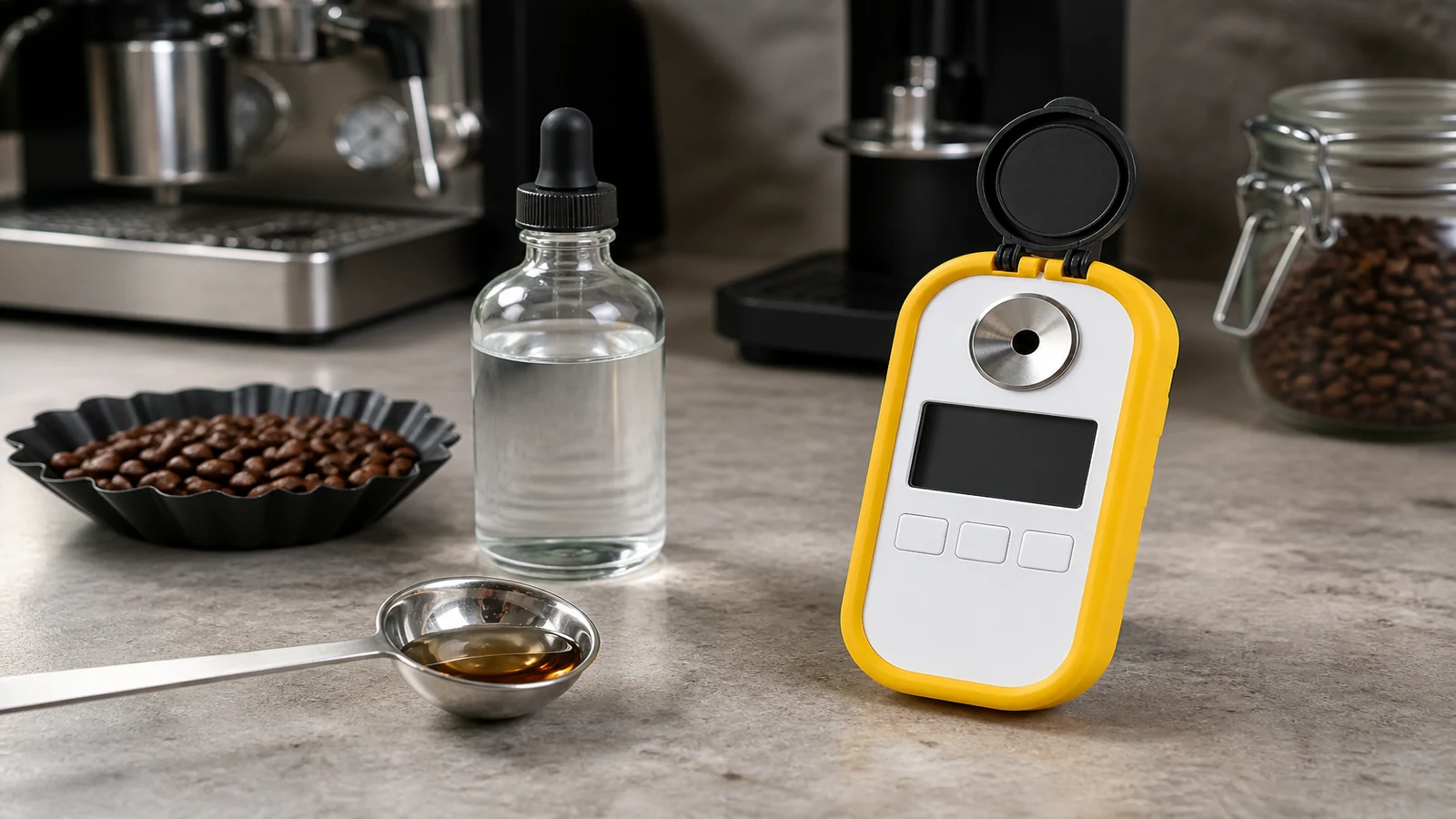
Stir the cup thoroughly, then transfer a few millilitres to a small ceramic spoon or pipette cup for thirty to sixty seconds. You want warm, degassed liquid—not room-temperature cold brew. Place two or three drops on the prism, cover if the device includes a cover plate, and wait for the reading to stabilise. Repeat the same wait each session so procedural time becomes constant.
Zero calibration with distilled water
On-site FAQ guidance describes zeroing with pure distilled water: clean the prism, apply drops, press Zero until the display confirms. Do this at the start of each session and whenever you move from a sugary calibration liquid back to coffee. Supermarket distilled water is fine; tap water mineral content throws zero off.
Cleaning between back-to-back readings
Rinse the sample well under the tap if your unit is IP65-rated—the Optical 101 listing cites IP65 for the sensor area—then dry with a lint-free cloth before the next coffee sample. Oils from one cup can bias the next reading enough to fake a 0.03% TDS swing.
Verify specs on the Optical 101 listing
Before trusting any protocol, read the current specifications on the Jiuhua Optical 101 detail page: 0–50 range, coffee TDS display, automatic temperature compensation and IP65 rinse guidance. Price is listed at £113.99 inc. VAT at time of writing—confirm live numbers before purchase.
Can I skip cooling if ATC is enabled?
Cooling slightly still improves film stability; ATC handles temperature math, not bubbles or evaporation.
How often should I zero with distilled water?
At the start of each brewing session and after cleaning or exposure to sticky liquids.
Is tap water okay for zero calibration?
No. Use distilled water so minerals do not offset zero.